
Outdoor
Outdoor Fireplaces in Utah
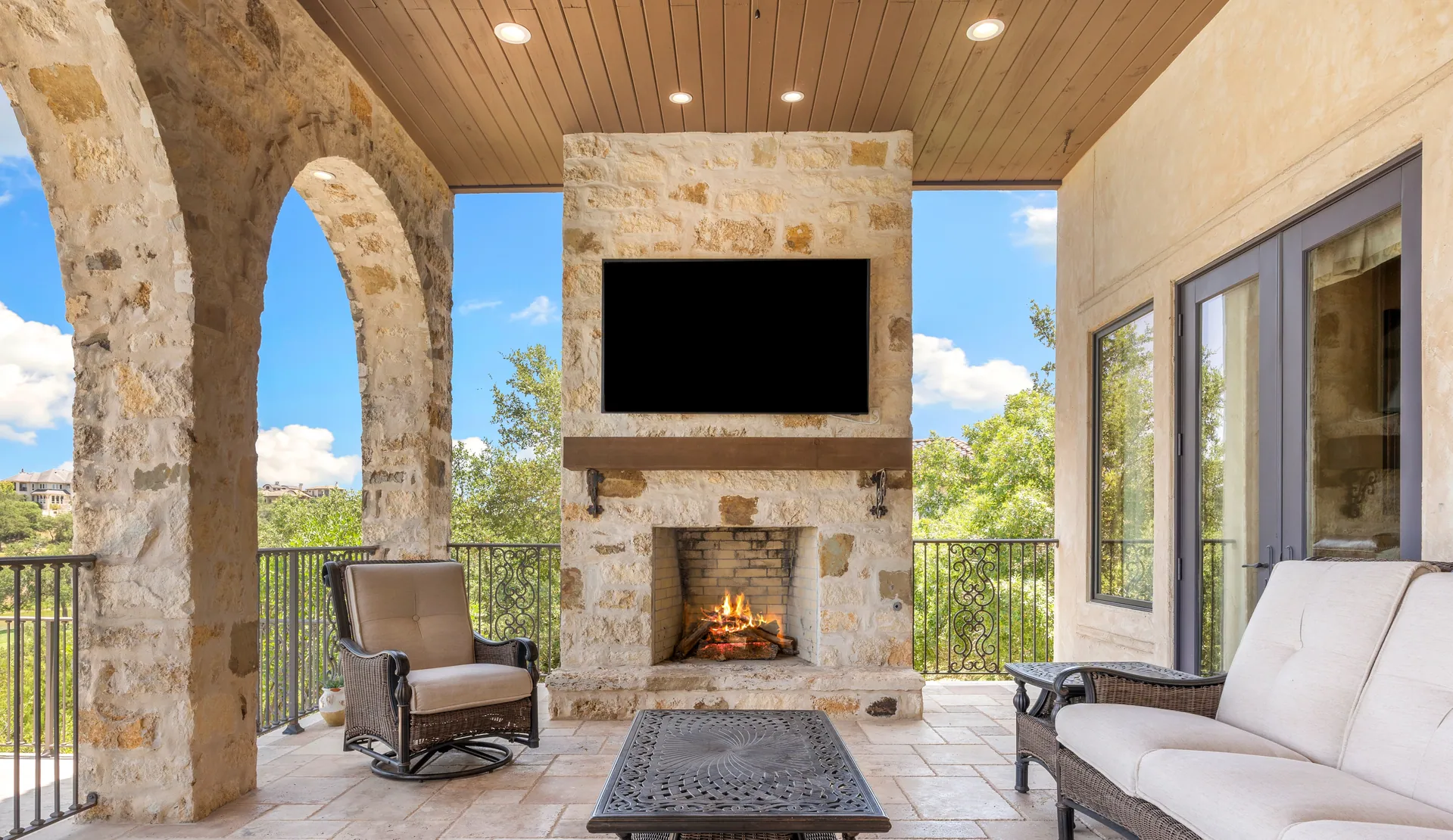
The anchor for a patio you'll actually use in April and October, not just July.
The product browser didn't load
It's a third-party tool and it isn't responding right now. Everything it shows is also on this page—keep scrolling for the full list, or go straight to your local shop, who can walk the whole range with you.
Concept
The short answer
An outdoor fireplace is a firebox rated for weather and open air, built into a patio wall, a covered structure, or a masonry surround. It is the anchor that turns a patio into a room you use in April and October rather than only in July. An indoor unit cannot simply be moved outside—the materials, the corrosion protection, and the listing are all different.
In plain language
Built for Weather, and for Open Air
Two things separate an outdoor unit from the indoor version of the same idea, and both matter more in Utah than in a mild climate.
- Rated for the outside
- Stainless components, corrosion protection, and a listing that accounts for rain, snow, and freeze-thaw. An indoor firebox put outside will fail, and it will void everything. The listing is the difference, not the look.
- Open air changes the fire
- Outdoors there is no room to heat and nothing to hold the warmth, so the fire is doing radiant work on the people in front of it. That is why a wider opening and a taller flame matter more out here than efficiency figures do.
- Covered, or fully exposed
- A fireplace under a pavilion or a covered patio has a very different install from one in an open yard—venting, clearances to the structure above, and how much weather the unit takes. Decide the structure first; it narrows the list faster than anything else.
- Appliance or masonry
- Up to a point this is an appliance decision. Past it, the answer becomes a modular masonry firebox faced in stone, which goes bigger than any listed unit and reads as built rather than installed.
Start here
Fireplace, Pit, or Table
Three ways to put fire on a patio, and they solve different problems.
- You want an architectural anchor and a wall of heat Outdoor fireplace—this is the category
- You want people to sit in a circle around it Fire pit
- You want it to double as furniture Fire table
- You want a scale no listed appliance reaches Modular masonry
- You are building the whole patio around cooking Outdoor kitchen
The difference
Outdoor Fireplace or Fire Pit
Both put fire outside. They shape a patio in completely different ways.
| Outdoor fireplace | Fire pit | |
|---|---|---|
| Seating | Faces one direction | A circle around it |
| Heat | Directional and strong in front | Even, all the way round |
| Wind | The firebox shelters the flame | More exposed |
| Build | Framed or masonry construction | From a purchased table to a custom build |
| Doubles as | An architectural wall | A table, if you want it to |
| Timeline | A project | Can be same-week |
Local
Why This Works in Utah
Evenings Cool Off Fast, Even in July
Utah's dry air gives up its heat the moment the sun goes down, and that is true at 2,500 feet as well as at 7,000. One fire is usually the whole difference between a patio that gets used after dinner and one that does not—which is the same 365-days argument as the indoor half of this catalogue, pointed outward.
It Stretches the Season at Both Ends
April and October are the months an outdoor fireplace buys back. That is a bigger prize here than in a mild climate, because the shoulder seasons are long, clear, and cold enough to keep people indoors without a reason to stay out.
Freeze-Thaw is the Thing that Kills Outdoor Installs
Water gets in, freezes, and takes masonry and finishes apart. It is the reason a weather-rated unit, correct flashing, and a cap matter here specifically—and the reason this is not a project to hand to whoever is cheapest.
What it costs
Installed, in Utah
Unit, vent, straightforward install
$4,700 – $6,600
A complete project
$6,000 – $14,400
The lower band covers the unit, the venting, and a straightforward install. The upper one is what a finished project usually runs once a gas line, electrical, and the stone or tile around it are in. On a remodel or a new build, about 2.5% of the total project budget is a useful sanity check. Whatever number you are given, make sure it covers the whole scope—unit, vent, gas line, electrical, finish work, and the permit.
Questions buyers ask
About Outdoor Fireplaces
Can I use an indoor fireplace outside?
No. An outdoor-rated unit uses stainless components and corrosion protection and carries a listing that accounts for rain, snow, and freeze-thaw. An indoor firebox installed outside will corrode, and it voids both the listing and the warranty. This is one of the few places in the catalogue where the answer is a flat no.
Do outdoor fireplaces need venting?
Yes, and how much depends on the structure. In the open a chimney still has to carry smoke and exhaust clear. Under a covered patio or a pavilion the clearances to the structure above and the termination height both come into it, which is why the roof over the patio should be settled before the unit is chosen.
Wood or gas for an outdoor fireplace?
Gas lights instantly, makes no smoke, and needs no storage, which is why most patio installs go that way. Wood gives the crackle and the smell people actually picture, at the cost of a woodpile, ash, and smoke that will find your neighbours on a still evening. Outdoors, air-quality restrictions on solid fuel apply the same way they do inside.
How much does an outdoor fireplace cost installed?
The appliance and a straightforward install commonly land in the $4,700 to $6,600 band, with complete projects at $6,000 to $14,400 once the surround, the gas line, and the structure are counted. Outdoors, the stone or stucco facing is often the largest single item—bigger than the firebox.
Can an outdoor fireplace be used under a covered patio?
Often yes, and it needs designing rather than assuming. The clearances to the ceiling and to any combustible structure, and where the flue terminates, are all model-specific. Tell the showroom what is above the unit at the first conversation—it is the detail most likely to change the model.
How much heat does an outdoor fireplace give?
Enough to make the seating area in front of it comfortable well into the cold months, and none at all behind it. Outdoors there is no room to warm, so everything is radiant—which means the useful measure is the width of the opening and how the seating is arranged, not a BTU figure.
Do I need a permit for an outdoor fireplace?
Usually yes, particularly with a gas line, a structure, or any masonry. City building division inside city limits, county outside, and gas piping by a licensed gas-fitter. Every shop in this network pulls the permit as part of the job.
What is the difference between an outdoor fireplace and an outdoor kitchen?
A fireplace is for gathering and warmth; a kitchen is for cooking. They frequently end up on the same patio and get built together, which is worth planning for—running one gas line and pouring one slab for both is a great deal cheaper than doing it twice.
Which outdoor fireplaces do these shops carry?
Napoleon's outdoor range leads, with Golden Blount filling the niche end. Beyond the listed appliances the answer becomes a modular masonry firebox faced to match the house.
Will an outdoor fireplace survive a Utah winter?
A weather-rated unit correctly installed and capped will. What damages outdoor installs here is water getting in and freezing—so flashing, a cap, and drainage matter more than they would in a mild climate. A cover over the winter is cheap insurance on a gas unit.
How long does an outdoor fireplace project take?
The appliance itself goes in quickly. What sets the schedule is everything else—the slab, the framing or masonry, the gas line, and the facing—and if it is part of a larger patio build it gets sequenced with those trades. Specifying the fireplace early is what keeps it from becoming the thing everyone is waiting on.
How it works
Here's How to Find the Perfect Fireplace
- 01
Browse the Products
Answer a few questions about your room and see the units that actually fit it.
Browse fireplaces → - 02
Find Your Local Dealer
Enter your zip code and meet the shop that serves your neighborhood. One shop, not a bidding pile.
Find your dealer → - 03
Book an Appointment
Showroom visit or in-home. They handle the permit, the venting, and the install.
Book an appointment →
Find the Shop That Carries This
Enter your zip code and meet the showroom nearest you.
Worth a look
Three Models to Check Out
Chosen from what these shops actually stock and install. Every one opens its own page.
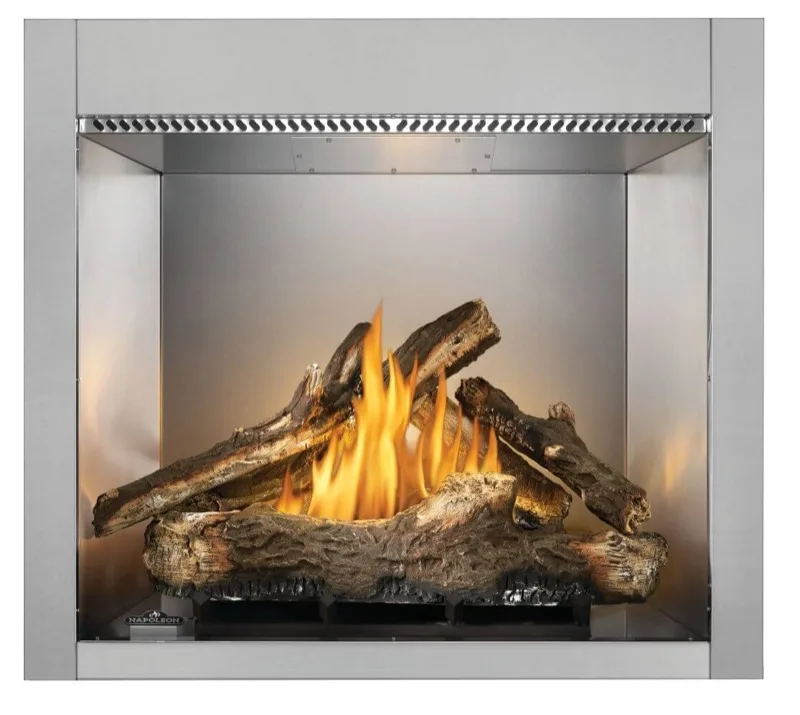 Napoleon
Riverside 36 Outdoor Fireplace
The straightforward patio fireplace, at the size most yards want
$$
Zero Clearance Outdoor
See this model →
Napoleon
Riverside 36 Outdoor Fireplace
The straightforward patio fireplace, at the size most yards want
$$
Zero Clearance Outdoor
See this model →
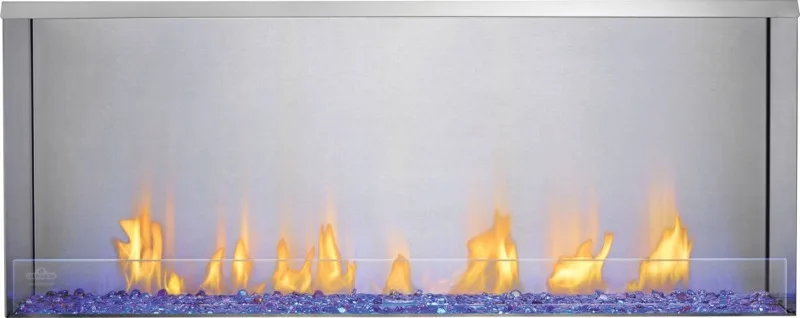 Napoleon
Galaxy 50 Outdoor Fireplace
Linear, for a covered patio built to match the room inside
$$$
Zero Clearance Outdoor
See this model →
Napoleon
Galaxy 50 Outdoor Fireplace
Linear, for a covered patio built to match the room inside
$$$
Zero Clearance Outdoor
See this model →
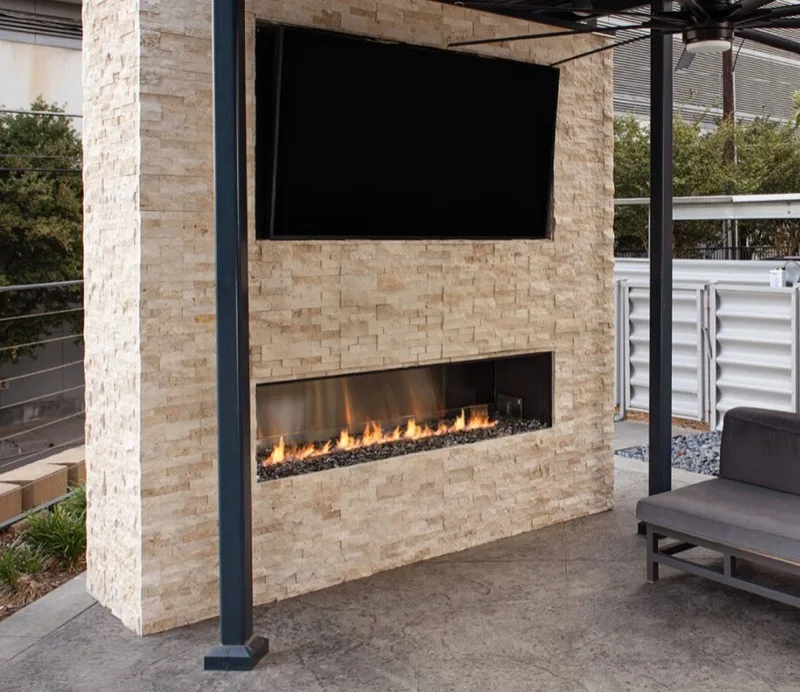 Golden Blount
LFP7218 Outdoor Fireplace (NG Only)
The wide outdoor opening, for a patio built around the fire
$$$$
Zero Clearance Outdoor
See this model →
Golden Blount
LFP7218 Outdoor Fireplace (NG Only)
The wide outdoor opening, for a patio built around the fire
$$$$
Zero Clearance Outdoor
See this model →
Three of 32. Everything else in this category is in the configurator further up the page.