

Indoor · gas
Gas Inserts in Utah
For a masonry fireplace that sends more heat up the chimney than into the room. An insert seals the flue and turns the hole in your house into a heater.
The product browser didn't load
It's a third-party tool and it isn't responding right now. Everything it shows is also on this page—keep scrolling for the full list, or go straight to your local shop, who can walk the whole range with you.
Concept
The short answer
A gas insert is a sealed firebox that slides into a masonry fireplace you already have and seals the flue behind it. It exists to fix a specific problem: an open fireplace sends more heated air up the chimney than the fire puts back into the room. Four measurements decide whether one fits—front width, front height, back width, and depth—and a masonry firebox tapers, so the back is almost always narrower than the front.
In plain language
What an Insert Actually Does
This is the one category on the site that is a heating decision rather than a decorating one. The vocabulary is short.
- It seals the flue
- An open masonry fireplace is close to break-even at best and often runs negative—it draws air the furnace already paid to heat and sends it up the chimney. An insert closes that opening, and the same hole in your house that was costing you heat starts producing it.
- The liner goes up the chimney
- A flexible stainless liner runs from the insert up through the existing flue to the top, which is what makes it a sealed direct-vent appliance rather than something venting into masonry. That liner is part of the job, not an upsell.
- The Four Measurements
- Front width, front height, back width, and depth. The back one is the number people forget, and it is the one that rules units out—a masonry firebox tapers toward the rear. Bring all four to the showroom and fit gets confirmed in about a minute.
- Surround and trim
- An insert is smaller than the hole it goes into, so a steel surround covers the gap between appliance and masonry. Sizes are finite, which occasionally decides the model—worth knowing before you fall for one.
Start here
Insert, Log Set, or Rebuild
You have a masonry fireplace. There are three honest answers, and they cost very different amounts.
- You want the fireplace to heat the room Gas insert
- You only want it to look and feel good Gas log set
- You want the biggest possible fire and will burn wood Wood insert
- The masonry is failing, or the opening is the wrong shape Tear out and build a zero-clearance unit in
The difference
Gas Insert or Gas Log Set
Both go into the fireplace you already have. Only one of them is a heater, and the price gap between them is large enough that the distinction matters.
| Gas insert | Gas log set | |
|---|---|---|
| Flue | Sealed, with a stainless liner | Stays open while burning |
| Heats the room | Yes—that is the point | Barely; most heat goes up the flue |
| Glass front | Yes, sealed | No, open to the room |
| Efficiency | High | Low by design |
| Look | A finished appliance in the opening | Closest thing to an open wood fire |
| Utah requirement | Safety pilot | Safety pilot—match-lit is not sold here |
Local
What Changes Because This Is Utah
Sealing the Fireplace is Worth More Here than in a Mild Climate
A long heating season and cold nights mean an open masonry fireplace has more hours to work against you. The efficiency argument for an insert is not abstract in a state where the furnace runs from October to April.
It Keeps Running on a Red Air Day
A sealed gas insert is unaffected by the solid-fuel restrictions the Division of Air Quality calls through inversion season. If you have a masonry fireplace you cannot legally light on the coldest, stillest days of the year, an insert is the fix.
A Safety Pilot is Required, and Has Been for Years
Utah requires a safety pilot with an automatic shutoff on gas appliances. Ignore the match-lit models on national retail sites—they are not a legal option here, and a unit bought online and shipped in may not be installable.
Above About 4,500 Feet, the Orifice Changes
The same high-altitude conversion that applies to built-in gas fireplaces applies here. Most of the Wasatch Front is at or above the threshold.
What it costs
Installed, in Utah
Unit, vent, straightforward install
$4,700 – $6,600
A complete project
$6,000 – $14,400
The lower band covers the unit, the venting, and a straightforward install. The upper one is what a finished project usually runs once a gas line, electrical, and the stone or tile around it are in. On a remodel or a new build, about 2.5% of the total project budget is a useful sanity check. Whatever number you are given, make sure it covers the whole scope—unit, vent, gas line, electrical, finish work, and the permit.
Questions buyers ask
About Gas Inserts
What is a gas fireplace insert?
A sealed gas firebox that slides into an existing masonry fireplace and seals the flue behind it with a stainless liner. It converts an opening that loses heat into an appliance that produces it. It cannot be used where there is no existing fireplace—that job calls for a zero-clearance gas fireplace instead.
What measurements do I need before shopping for an insert?
Four, from the existing firebox: front width, front height, back width, and depth. A masonry firebox tapers, so the back is usually narrower than the front, and that rear measurement is the one that rules models out. If crawling into a firebox with a tape measure is not appealing, that is what the in-home visit is for.
Will a gas insert actually heat my room?
Yes, and that is the difference between an insert and a log set. Sealing the flue stops the chimney from pulling heated air out of the house, and a sealed firebox with a fan puts usable heat back into the room. Expect it to make one main living space genuinely warm rather than to replace a furnace.
Does a gas insert need a chimney liner?
Yes. A flexible stainless liner runs from the insert to the top of the existing flue, which is what makes it a sealed direct-vent appliance. It is part of a correct installation, not an optional extra, and it is one of the reasons an insert costs more than dropping in a log set.
Can I put a gas insert into a prefabricated metal fireplace?
Sometimes, and it needs checking rather than assuming. Many inserts are listed for masonry only, and a factory-built metal firebox has its own listing that an insert may not be approved to modify. Take a photo of the data plate inside the firebox to the showroom—that plate answers it.
How much does a gas insert cost installed?
Roughly $4,700 to $6,600 covers the unit, the liner, and a straightforward install. Complete projects run higher once a gas line, electrical, or new facing is involved—commonly $6,000 to $14,400. The liner and the gas line are the two items most likely to be missing from a low quote.
Which gas inserts do Utah dealers push?
The Napoleon Oakville comes first in this network, then the Oakville 3X and 4X—the biggest sellers, and the ones nearly every shop keeps on the floor. Napoleon's newer Rosedale line is smaller and not a big heater, so it is not the lead recommendation for a room you are trying to warm.
How long does an insert installation take?
Usually a day. The liner goes down the chimney, the insert goes in, the gas line gets connected and tested, and the surround finishes it. Existing masonry means no framing and no drywall, which is why this is one of the least disruptive projects in the catalogue.
Do I need a permit to install a gas insert?
Yes—city building division inside city limits, county in unincorporated areas, and gas piping by a licensed gas-fitter. The shop that sells it pulls the permit and handles the inspection.
Can I keep burning wood in the fireplace after an insert goes in?
No. The insert and its liner occupy the firebox and the flue, and the opening is sealed. If burning wood some of the time matters to you, look at a wood insert instead—same idea, different fuel, and it keeps the option of heat without a gas line.
Is a gas insert better than a gas log set?
For heat, clearly. For the look and feel of an open wood fire, a log set is closer, and it costs a fraction as much. The honest question is what you want the fireplace to do. If the answer is 'be warm', it is an insert; if it is 'be beautiful on Christmas Eve', a log set does that job for less.
How it works
Here's How to Find the Perfect Fireplace
- 01
Browse the Products
Answer a few questions about your room and see the units that actually fit it.
Browse fireplaces → - 02
Find Your Local Dealer
Enter your zip code and meet the shop that serves your neighborhood. One shop, not a bidding pile.
Find your dealer → - 03
Book an Appointment
Showroom visit or in-home. They handle the permit, the venting, and the install.
Book an appointment →
Find the Shop That Carries This
Enter your zip code and meet the showroom nearest you.
Worth a look
Three Models to Check Out
Chosen from what these shops actually stock and install. Every one opens its own page.
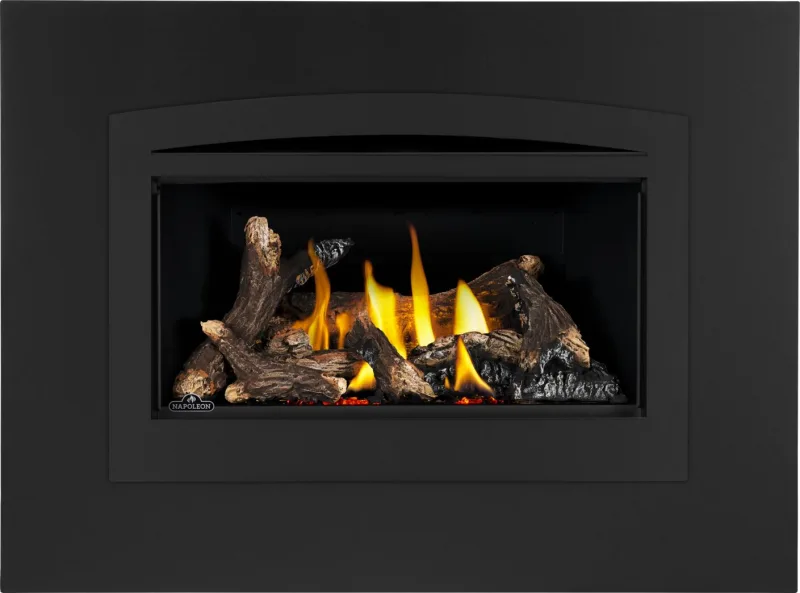 Napoleon
Rosedale RD2
The insert every shop in this network stocks
$$
Insert
See this model →
Napoleon
Rosedale RD2
The insert every shop in this network stocks
$$
Insert
See this model →
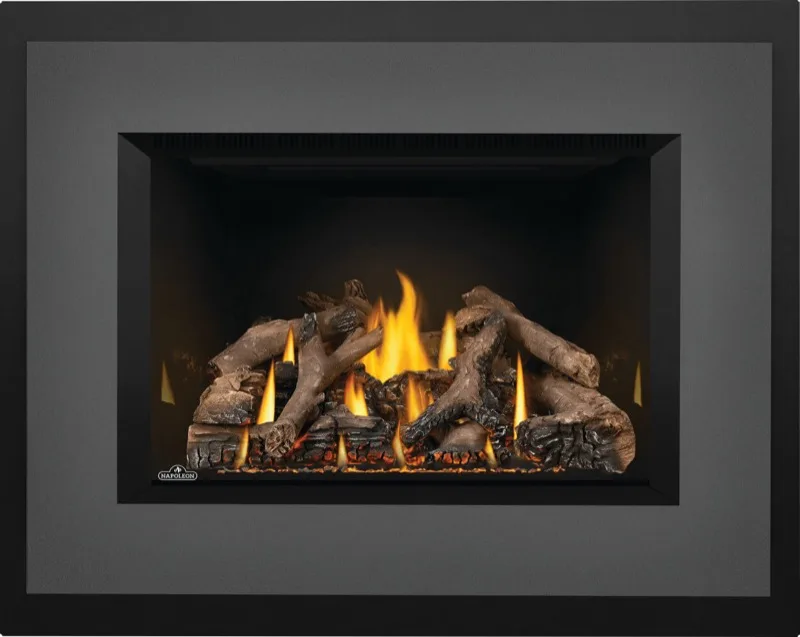 Napoleon
Oakville 4X
The larger Oakville, for an opening that can take it
$$$$
Insert
See this model →
Napoleon
Oakville 4X
The larger Oakville, for an opening that can take it
$$$$
Insert
See this model →
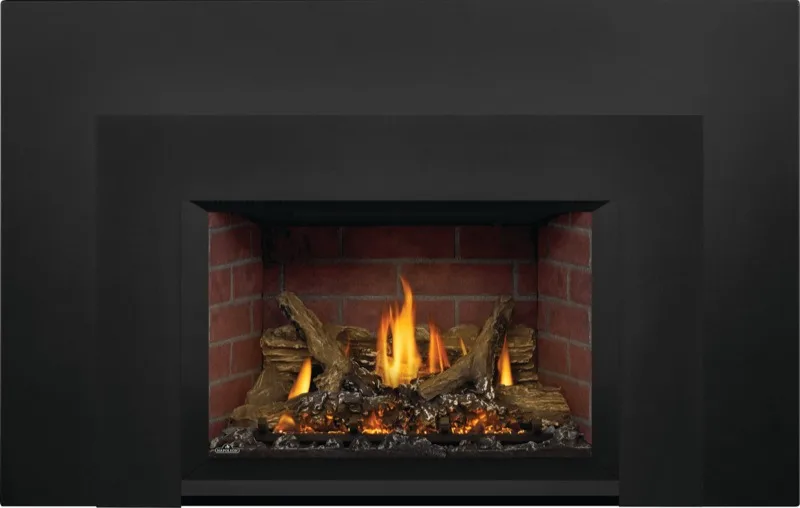 Napoleon
Oakville 3X
The X-series insert, for a narrower masonry opening
$$$$
Insert
See this model →
Napoleon
Oakville 3X
The X-series insert, for a narrower masonry opening
$$$$
Insert
See this model →
Three of 9. Everything else in this category is in the configurator further up the page.