

Indoor · gas
Gas Fireplaces in Utah
The default here, and for good reason: gas is inexpensive, it reaches nearly every populated part of the state, and it runs on any air quality day.
The product browser didn't load
It's a third-party tool and it isn't responding right now. Everything it shows is also on this page—keep scrolling for the full list, or go straight to your local shop, who can walk the whole range with you.
Concept
The short answer
A gas fireplace is a sealed appliance built into a framed wall, vented through a pipe to the outside, with no masonry chimney involved. In Utah it is the default choice—natural gas is inexpensive, it reaches nearly every populated part of the state, and a sealed unit is legal to run on a red air day when wood burning is restricted. Above roughly 4,500 feet it needs a high-altitude orifice conversion, which is routine work that has to actually be done.
In plain language
The Words That Unlock the Catalogue
Four terms account for most of the confusion in a showroom. Once these land, two-thirds of the range rules itself out and the conversation gets short.
- Zero-clearance
- Industry shorthand for a firebox engineered to build safely into a framed wall—no masonry needed. It is the answer for new construction and for a remodel where there is no existing fireplace. The name refers to the clearances to combustible framing that the unit is tested to, not to the finish work.
- Direct vent
- The unit pulls combustion air from outside and pushes exhaust back out through a sealed double-wall pipe. Nothing about the fire touches the air in the room, which is what makes it both efficient and unaffected by air-quality restrictions. Nearly everything these shops install is direct vent.
- Louvered or clean face
- Louvered units carry grille work above and below the glass; the airflow lets a fan move more heat, and the look reads traditional. A clean-face unit has no grille work at all, so your tile or stone runs right up to the glass. The choice changes the finish detailing, so it needs settling before anyone frames the wall.
- Linear, modern, contemporary, European, transitional
- These describe roughly the same handful of shapes, and a showroom will use them interchangeably. What actually matters is whether the unit builds into a framed wall or slides into a masonry opening, how wide the glass is, and how the finish meets it. Do not let four words become four decisions.
Start here
Which One Your House Decides
The building picks the category before taste gets a vote. Start here.
- A framed wall, a remodel, or new construction Zero-clearance gas fireplace
- An existing masonry firebox you want to heat with Gas insert
- An existing masonry firebox you only want to look good Gas log set
- No gas line, and running one is not realistic Electric
- Open floor space and the most heat available A stove, out in the room
The difference
Gas Fireplace or Gas Insert
The most common mix-up in the category, and the one that wastes the most time. They are not two styles of the same thing.
| Gas fireplace | Gas insert | |
|---|---|---|
| Where it goes | Into a framed wall | Into an existing masonry firebox |
| Needs an existing fireplace | No | Yes—there is nothing to insert it into otherwise |
| Typical project | New build, remodel, a blank wall | A brick fireplace that loses heat |
| Framing and drywall | Yes, the wall gets built around it | No, the opening already exists |
| Sizing driven by | Room size and the wall you have | Four firebox measurements |
| Glass width available | Up to very wide linear formats | Limited by the opening |
Local
What Changes Because This Is Utah
Above About 4,500 Feet it is a Different Appliance
A gas burner is calibrated for a certain amount of oxygen per unit of fuel. Thinner air means less oxygen through the same orifice, which shifts the burn—sooting, a lazy flame, poor output, sometimes a unit that will not stay lit. The fix is a different orifice, supplied by the manufacturer as a conversion kit.
Roughly 4,500 feet is the common threshold, and it varies by model. Salt Lake City sits near 4,300, Provo about 4,500, Heber near 5,600, Park City close to 7,000. St. George, at about 2,500, is the part of the state where this often does not apply—which is exactly why a national answer is the wrong answer here.
It Runs on a Red Air Day
Through winter, Utah's Division of Air Quality watches particulate trapped by valley inversions and calls a daily designation. On a red day along the Wasatch Front, solid-fuel burning is restricted—and those days land in the middle of heating season.
A sealed gas unit is unaffected. That is the practical reason gas became the default hearth in Utah's valleys: it works on the days you most want heat, and it adds nothing to a basin already managing its own air.
Roughly 80% of What These Shops Install is Gas
Not because it is the reflex answer everywhere, but because in Utah it genuinely is the right one for most homes. Gas is cheap here, the line usually already reaches the house, and extending it to a fireplace is normally a straightforward add.
What it costs
Installed, in Utah
Unit, vent, straightforward install
$4,700 – $6,600
A complete project
$6,000 – $14,400
The lower band covers the unit, the venting, and a straightforward install. The upper one is what a finished project usually runs once a gas line, electrical, and the stone or tile around it are in. On a remodel or a new build, about 2.5% of the total project budget is a useful sanity check. Whatever number you are given, make sure it covers the whole scope—unit, vent, gas line, electrical, finish work, and the permit.
Questions buyers ask
About Gas Fireplaces
What is the difference between a gas fireplace and a gas insert?
A gas fireplace builds into a framed wall—new construction, a remodel, or a blank wall with nothing there before. A gas insert slides into a masonry firebox that already exists and seals it. If there is no existing fireplace, there is nothing to insert, and the answer is a zero-clearance gas fireplace.
Do gas fireplaces need a chimney?
No. A direct-vent gas fireplace uses a sealed double-wall pipe that can run out through a side wall or up through the roof, which is what makes it installable almost anywhere in a house. An existing masonry chimney is sometimes used as a chase to route that pipe, but the chimney itself does no venting.
How much does a gas fireplace cost installed in Utah?
For the unit, the venting, and a straightforward install, plan on roughly $4,700 to $6,600. A complete project—gas line, electrical, and the stone or tile around it—more often lands between $6,000 and $14,400. On a remodel or new build, about 2.5% of the total project budget is a useful check.
Every shop in this network installs its own work, so the number you are quoted covers the whole scope rather than the appliance alone.
What size gas fireplace do I need for my room?
Think in square footage, not BTUs. More output is not better—there is nothing worse than spending five figures on a fireplace you cannot run because it cooks you out of the room. Tell the showroom the room size, whether this is primary or backup heat, and how open the floor plan is. Those three answers get you the right unit faster than any spec sheet.
Does a gas fireplace need a high-altitude conversion in Utah?
Above roughly 4,500 feet, many gas appliances do—a different orifice sized for thinner air, supplied by the manufacturer as a kit. The exact threshold varies by model. Most of the Wasatch Front sits at or above that line, and Park City and Heber are well above it.
It is routine work. The failure mode is that it quietly does not get done, and the symptoms—sooting, a lazy flame, weak heat—get blamed on the appliance.
Can I put a TV above a gas fireplace?
Often, but ask before the tile is set. Heat rises and televisions do not like heat. A mantel blocks a lot of it, and some units are built specifically to manage the wall above—keeping it barely warm while still putting full heat into the room. If a TV, artwork, or small hands are going on that wall, raise it at the showroom rather than afterwards.
Will a gas fireplace work when the power goes out?
It depends on the ignition. A standing pilot will light and burn with no electricity at all. An electronic-ignition unit usually needs power, though many carry a battery backup that will start it. The fan will not run either way, so you get radiant heat rather than circulated heat.
If riding out an outage is a real concern—a canyon home or a cabin—say so at the showroom. It changes which units are on the table.
What is the difference between a vented and a vent-free gas fireplace?
A vented unit sends its exhaust outside through a sealed pipe, and nothing about the fire touches the air in the room. A vent-free unit has no flue at all—it burns clean enough to be certified without one, which means every bit of its heat stays in the house, and so does the water vapour and the exhaust.
Both are in this catalogue, and the honest summary is that vent-free buys you install flexibility and full heat retention in exchange for putting combustion products into the room you are sitting in. Vent-free is legal in Utah with restrictions, and it is normally sized as supplemental heat for a specific space rather than as a main fire. Given how closely this state already watches winter air quality, most homeowners here lean direct-vent for the indoor air as much as for the performance.
How long does a gas fireplace installation take?
The appliance and vent go in inside a day for a straightforward job. What sets the schedule is everything around it—framing, the gas line, electrical, and finish work—and on a new build those are sequenced against other trades. Getting the fireplace specified early is the single thing that keeps it off the punch list.
Do I need a permit for a gas fireplace in Utah?
Yes. Inside city limits it goes through the city building division, and unincorporated areas go through the county. Gas piping has to be done by a licensed gas-fitter. Every shop here pulls the permit, coordinates the hookup, and handles the final inspection as one job.
Which gas fireplaces do Utah showrooms actually stock?
Napoleon leads nearly every category in this network. On the built-in side that means the Altitude X and Elevation X ranges first, then Vector and Tall Vector, then the Ascent series. American Hearth fills in behind, and Flare covers the very wide custom formats above 70 inches.
What is on any given floor varies by shop. The dealer page for your area lists what that showroom keeps.
Can a gas fireplace heat a whole house?
It is not designed to, and treating it as a furnace replacement usually ends badly. What a well-placed unit does is comfort-zone heating—it makes the room you actually live in warm enough that you can turn the thermostat down for the rest of the house. That is where the running-cost saving comes from, not from out-heating a furnace.
How it works
Here's How to Find the Perfect Fireplace
- 01
Browse the Products
Answer a few questions about your room and see the units that actually fit it.
Browse fireplaces → - 02
Find Your Local Dealer
Enter your zip code and meet the shop that serves your neighborhood. One shop, not a bidding pile.
Find your dealer → - 03
Book an Appointment
Showroom visit or in-home. They handle the permit, the venting, and the install.
Book an appointment →
Find the Shop That Carries This
Enter your zip code and meet the showroom nearest you.
Worth a look
Three Models to Check Out
Chosen from what these shops actually stock and install. Every one opens its own page.
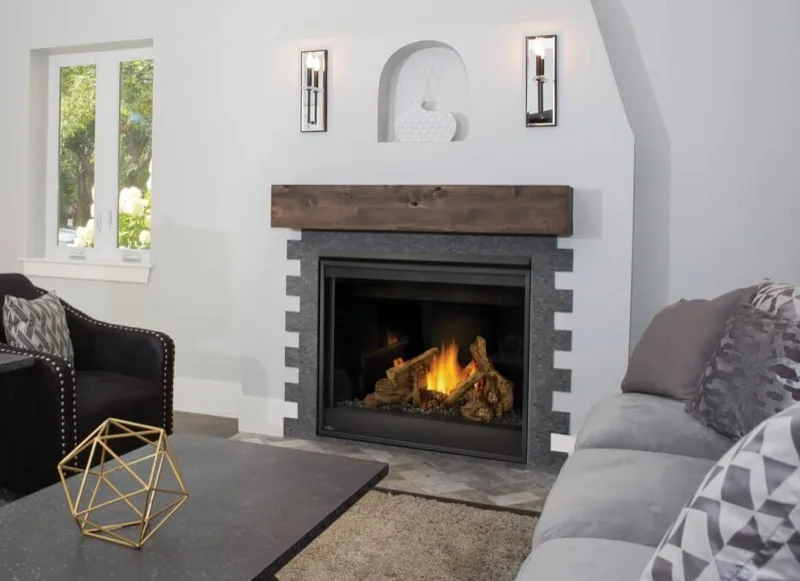 Napoleon
Ascent 42
The one most likely to be lit on the floor when you walk in
$$
Zero Clearance
See this model →
Napoleon
Ascent 42
The one most likely to be lit on the floor when you walk in
$$
Zero Clearance
See this model →
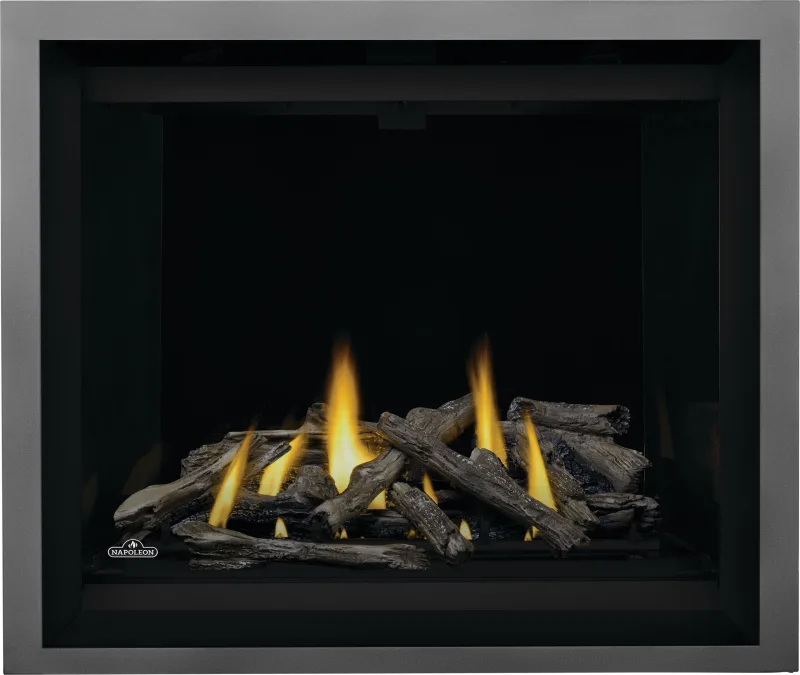 Napoleon
Altitude X AX42
The step up these shops lead with when the fireplace is the room's feature
$$$
Zero Clearance
See this model →
Napoleon
Altitude X AX42
The step up these shops lead with when the fireplace is the room's feature
$$$
Zero Clearance
See this model →
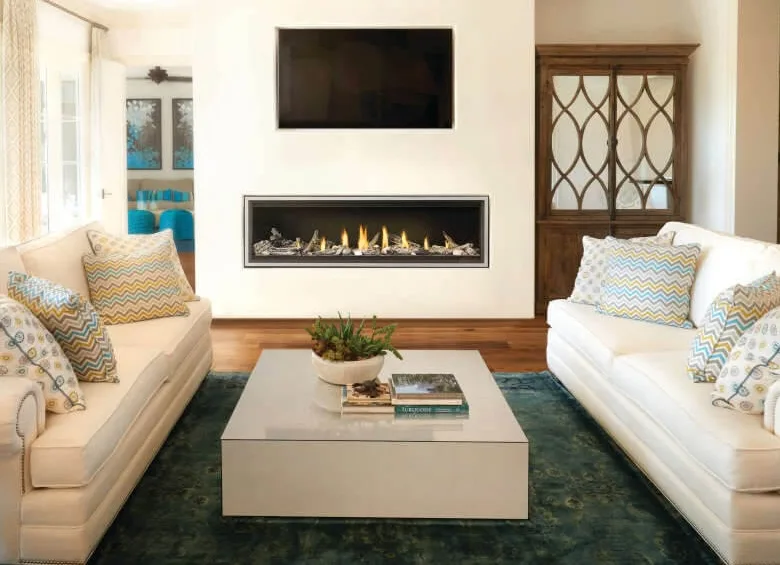 Napoleon
Vector 62
For a long, low opening in a modern wall
$$$$
Zero Clearance
See this model →
Napoleon
Vector 62
For a long, low opening in a modern wall
$$$$
Zero Clearance
See this model →
Three of 181. Everything else in this category is in the configurator further up the page.