
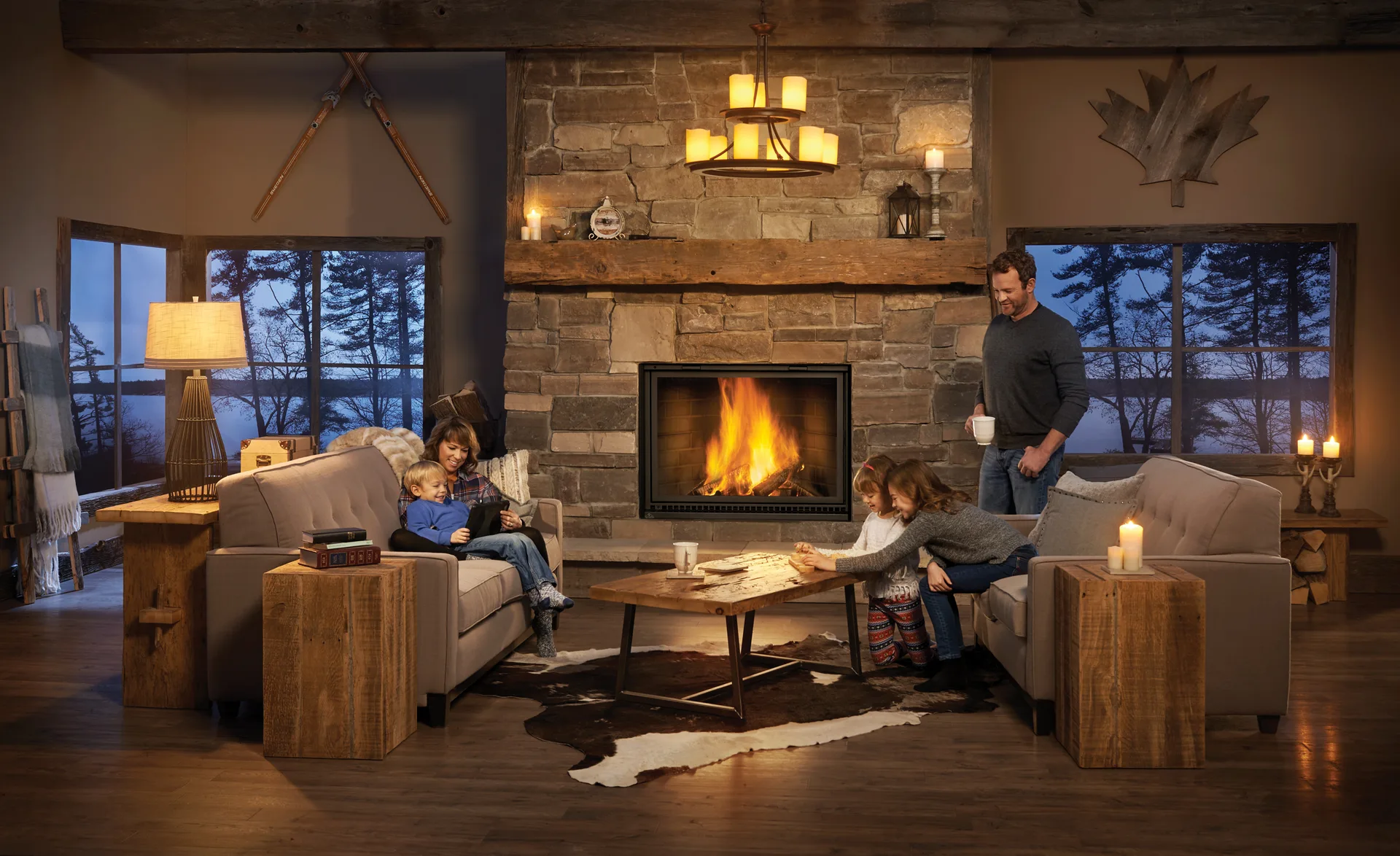
Indoor · wood
Wood Fireplaces in Utah
Open-hearth wood, for the rooms that want the biggest fire in the house—and for homes where the power going out isn't hypothetical.
The product browser didn't load
It's a third-party tool and it isn't responding right now. Everything it shows is also on this page—keep scrolling for the full list, or go straight to your local shop, who can walk the whole range with you.
Concept
The short answer
A wood fireplace here means an open-hearth firebox built into a wall—a big traditional fire rather than a sealed high-efficiency appliance. It is what goes into custom homes that want the largest possible fire, and some models can burn wood or gas so the option stays open. In Utah's valleys, solid-fuel burning is restricted on air-quality action days, which is why wood makes the most sense above the inversion line, in canyons, and at cabins.
In plain language
Open Hearth, and What That Trades Away
This category is chosen for the fire, not for the efficiency. Being clear about that up front saves a lot of disappointment later.
- Open hearth
- A large traditional firebox, screen-front or with doors, built into a framed or masonry wall. The appeal is scale and the sound and smell of a real wood fire. The trade is efficiency—an open fire draws room air up the flue, and some of the heat you feel is offset by the heated air leaving.
- Wood or gas, in the same box
- Several of the big open-hearth units are approved to burn wood or to take a gas log set later. That flexibility is exactly why they turn up in large custom homes—the owner keeps the option without committing on day one.
- Size is the whole point
- The reason to be in this category is a fire bigger than a sealed appliance can give you. American Hearth's Hamilton series runs 36, 44, and 54 inches, and the Monroe 60 is one of the largest traditional units made—and it needs no power vent.
- Not the same as a high-efficiency wood unit
- If the goal is heat rather than spectacle, you want an EPA-certified stove or insert instead. Those are a different category with different physics and a very different fuel bill.
Start here
Open Fire, or Actual Heat
Wood splits cleanly into two intentions, and picking the wrong one is the most expensive mistake here.
- You want the biggest fire in the house, and heat is a bonus Open-hearth wood fireplace
- You want wood heat you can rely on Wood stove
- You have a masonry fireplace and want wood heat from it Wood insert
- You want a fire you can light on a red air day Gas or electric
- You want a masonry look at a scale no appliance reaches Modular masonry
The difference
Open-Hearth Wood or an EPA-Certified Unit
Both burn wood. They are not competing for the same job.
| Open hearth | EPA-certified stove or insert | |
|---|---|---|
| Chosen for | The size and feel of the fire | Heat output and fuel economy |
| Efficiency | Low—an open fire pulls room air up the flue | Past 70% |
| Burn time | Short; it needs tending | Long, and it will hold overnight |
| Red air day | Restricted in the valleys | Restricted, unless registered as sole heat source |
| Firebox size | Up to 60 inches | Sized to a heating load, not to a wall |
| Can convert to gas later | Often, by design | No |
Local
Where Wood Makes Sense in Utah
Above the Inversion Line, in Canyons, and at Cabins
Through winter the Division of Air Quality calls a daily designation, and on a red day along the Wasatch Front solid-fuel burning is restricted. Those days fall in the middle of heating season. Higher ground, canyon properties, and second homes outside the affected basins are where wood stops being a compromise.
The Outage Argument is Real, and it is Why Pellet is Not Carried
Wood needs no electricity. A pellet appliance has augers, fans, and a control board, and it stops the moment the power does—which in a canyon is exactly when heat matters. That, plus a thin bagged-fuel supply across much of the state, is why these shops carry no pellet at all and point people to wood or to propane instead.
Utah Does Not Require Glass Doors on an Open Fireplace
Unlike some states, there is no glass-door requirement here, so a screen-front unit stays on the table. Doors are a choice about heat and draft, not a compliance item.
What it costs
Installed, in Utah
Unit, vent, straightforward install
$4,700 – $6,600
A complete project
$6,000 – $14,400
The lower band covers the unit, the venting, and a straightforward install. The upper one is what a finished project usually runs once a gas line, electrical, and the stone or tile around it are in. On a remodel or a new build, about 2.5% of the total project budget is a useful sanity check. Whatever number you are given, make sure it covers the whole scope—unit, vent, gas line, electrical, finish work, and the permit.
Questions buyers ask
About Wood Fireplaces
What is an open-hearth wood fireplace?
A large traditional wood firebox built into a wall, screen-front or with doors, chosen for the size and character of the fire rather than for efficiency. It is a different category from an EPA-certified stove or insert, which are built to heat.
Are wood fireplaces legal in Utah?
Yes, and their use is restricted on air-quality action days in the affected valleys. Through inversion season the Division of Air Quality calls a daily designation, and on a red day solid-fuel burning is not permitted along the Wasatch Front. New installations also have to meet current code, which is one of the reasons this is not a do-it-yourself project.
Outside the affected basins—canyons, higher elevations, much of rural Utah—those daily restrictions do not bite the same way.
Can a wood fireplace be converted to gas later?
Several of the large open-hearth units are built with exactly that in mind, and it is a common reason people choose them. Confirm it for the specific model before you buy rather than assuming—the approval is per unit, and adding a gas line to a firebox that was never listed for it is not a conversion anyone should improvise.
What is the largest wood fireplace available?
In this network, the Monroe 60 is the biggest traditional unit on the board, and it needs no power vent. The American Hearth Hamilton series covers 36, 44, and 54 inches below it. Above that scale the answer stops being an appliance and becomes modular masonry.
Will an open wood fireplace heat my house?
No, and it is worth being blunt about it. An open fire draws room air up the flue, so a good deal of what it produces is offset by heated air leaving the house. It is a spectacular fire and a poor furnace. If heat is the goal, the answer is an EPA-certified stove or insert.
Do I need glass doors on a wood fireplace in Utah?
Not as a legal requirement—Utah has no glass-door rule, unlike some states. Doors change how the unit drafts and how much heat stays in the room, so it is a performance choice. These shops do not treat glass doors as a real product line, so if you want them, raise it early.
How much does a wood fireplace cost installed?
The appliance and a straightforward install commonly land in the $4,700 to $6,600 band, and complete projects run $6,000 to $14,400 once the chimney, framing, and finish work are counted. Wood adds a real chimney system rather than a short direct-vent run, so the venting is a larger share of the total than it is with gas.
What clearances does a wood fireplace need?
More than most people expect, and they are unit-specific—clearances to combustible framing, to the mantel, to the hearth extension in front, and the chimney's own clearances through the roof. These are the numbers that make wood a trade rather than a project, and they are why the shop that sells it should be the shop that installs it.
How often does a wood fireplace chimney need sweeping?
Once a year for regular use, and more often if you burn a lot or burn less-than-dry wood. Creosote is the reason, and an annual inspection catches the other things—cap, crown, liner, and flashing—before they become water damage.
Do I need a permit for a wood fireplace?
Yes, and the inspection matters more here than in most categories because of the chimney and the clearances. City building division inside city limits, county outside. Every shop in this network pulls it and sees the inspection through.
Is wood cheaper to run than gas in Utah?
Usually not, and that surprises people. Natural gas in Utah is inexpensive and reaches nearly every populated part of the state, which sets a low bar. Wood competes on independence from the grid and on the quality of the fire, not on running cost—unless you cut your own.
How it works
Here's How to Find the Perfect Fireplace
- 01
Browse the Products
Answer a few questions about your room and see the units that actually fit it.
Browse fireplaces → - 02
Find Your Local Dealer
Enter your zip code and meet the shop that serves your neighborhood. One shop, not a bidding pile.
Find your dealer → - 03
Book an Appointment
Showroom visit or in-home. They handle the permit, the venting, and the install.
Book an appointment →
Find the Shop That Carries This
Enter your zip code and meet the showroom nearest you.
Worth a look
Three Models to Check Out
Chosen from what these shops actually stock and install. Every one opens its own page.
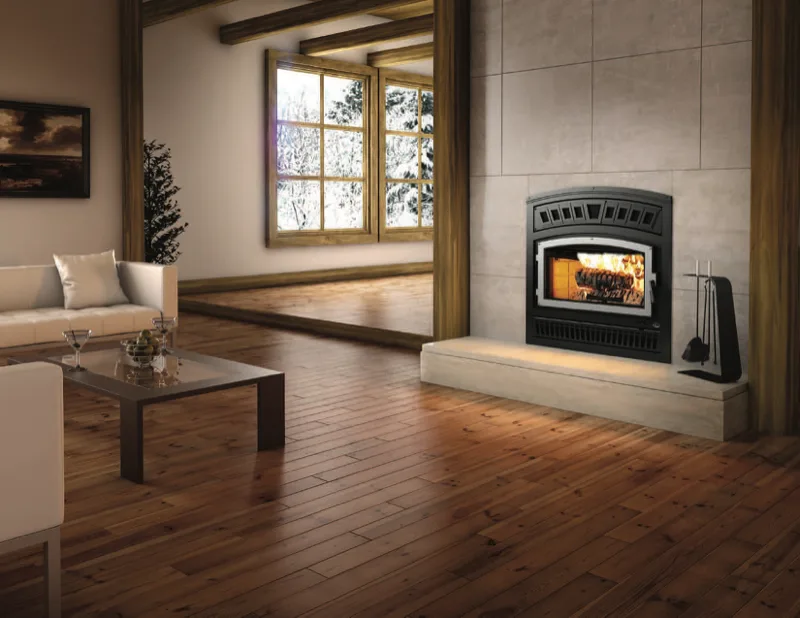 Valcourt
Lafayette II Wood Fireplace
Certified wood heat for an ordinary room, and the one these shops lead with
$
Zero Clearance
See this model →
Valcourt
Lafayette II Wood Fireplace
Certified wood heat for an ordinary room, and the one these shops lead with
$
Zero Clearance
See this model →
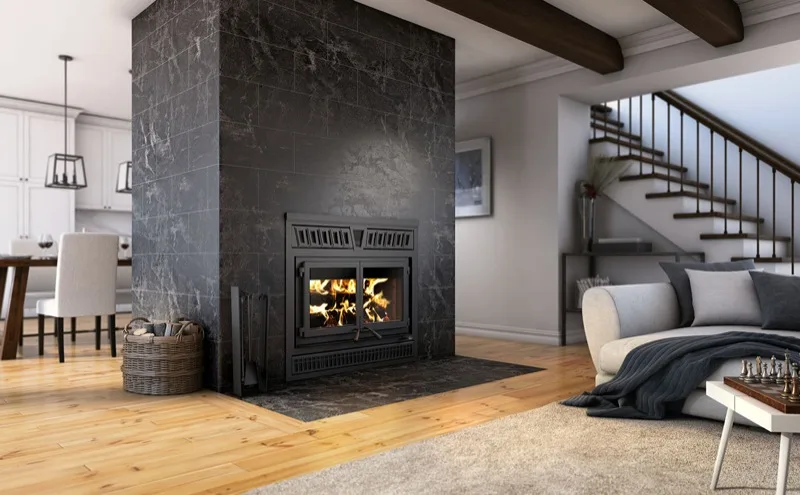 Valcourt
Waterloo Wood Fireplace
The same idea a size up, with a choice of faceplate
$$
Zero Clearance
See this model →
Valcourt
Waterloo Wood Fireplace
The same idea a size up, with a choice of faceplate
$$
Zero Clearance
See this model →
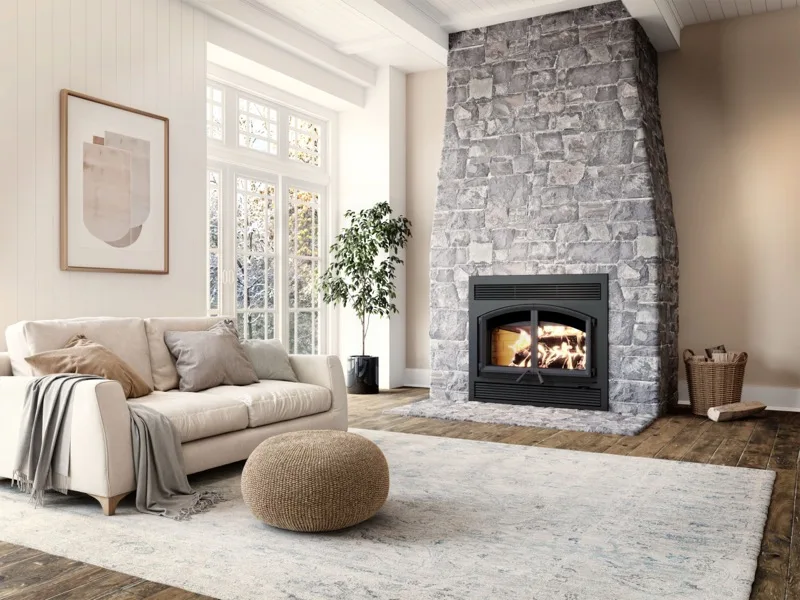 Enerzone
Solution 4.5 ZC II
When the room is big and the fire is meant to be the event
$$$
Zero Clearance
See this model →
Enerzone
Solution 4.5 ZC II
When the room is big and the fire is meant to be the event
$$$
Zero Clearance
See this model →
Three of 18. Everything else in this category is in the configurator further up the page.