
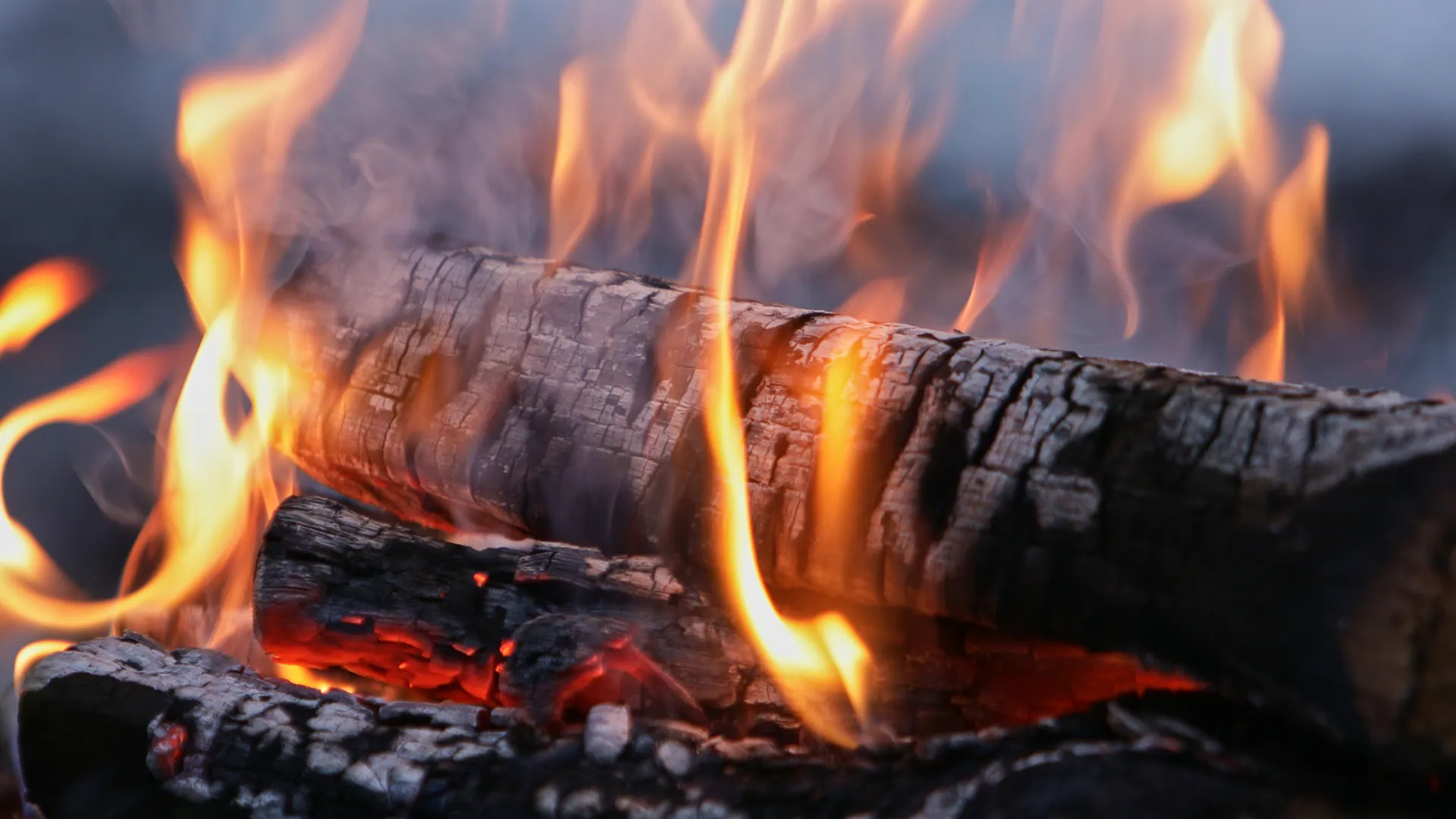
Indoor · gas
Gas Logs in Utah
For a masonry fireplace you want to actually use. Real-looking logs, a burner, and a safety pilot—which Utah requires.
The product browser didn't load
It's a third-party tool and it isn't responding right now. Everything it shows is also on this page—keep scrolling for the full list, or go straight to your local shop, who can walk the whole range with you.
Concept
The short answer
A gas log set is a burner and a set of ceramic logs dropped into a masonry fireplace you already have, so you get a fire without building anything. It is the least expensive way to make an unused fireplace usable, and on a vented set it is not a heater—the damper stays open and most of the heat leaves with the exhaust. Utah requires a safety pilot with an automatic shutoff, so the match-lit sets sold on national sites are not an option here.
In plain language
The Burner Is the Appliance
People shop for logs and buy a burner. Four distinctions decide what you end up with, and the first one changes everything else.
- Vented
- Burns with the damper open and vents up the chimney. It gives the tallest, most convincing yellow flame—closest to a real wood fire—and very little of the heat stays in the room. This is what most people picture when they picture gas logs.
- Vent-free
- Certified to burn cleanly enough to run with the damper closed, so all of the heat stays in the house—and so does the water vapour and the exhaust. Legal in Utah with restrictions, and normally sized as supplemental heat for one space rather than as the main fire.
- Safety pilot, or full electronic ignition
- Utah requires a safety pilot carrying a thermocouple that shuts the gas off if the flame goes out. Above that baseline the choice is a standing pilot, a pilot-on-demand system, or full electronic ignition with remote and thermostat control. Match-lit is not on the table here.
- Traditional or modern media
- About three quarters of what sells in this network is a traditional log set. The rest is the modern side—fire balls, lava stone, crushed glass, and geometric shapes on the same burner. The burner does the work; the media decides the look.
Start here
You Have a Masonry Fireplace. Now What?
Four honest answers, and they are separated by a factor of ten in price.
- You want it usable and beautiful, cheaply Gas log set—this is the category
- You want that opening to heat the room Gas insert
- You want wood heat from it Wood insert
- There is no fireplace to work with Zero-clearance gas fireplace
The difference
Vented or Vent-Free Log Set
The one comparison worth understanding before you shop, because it changes the flame, the heat, and where the set is allowed to go.
| Vented | Vent-free | |
|---|---|---|
| Damper | Open while burning | Closed |
| Flame | Tall, yellow, closest to real wood | Shorter and more controlled by design |
| Heat into the room | Little—most goes up the flue | Nearly all of it |
| Exhaust and moisture | Outside | Into the room |
| Needs a working chimney | Yes | No, but it needs the right room volume |
| Where it is allowed | Widely | Legal in Utah with restrictions—sized to the room |
Local
What Changes Because This Is Utah
A Safety Pilot is Required, and Has Been for Years
Utah requires a safety pilot with an automatic shutoff on vented gas log sets. A match-lit set—open the valve, light it by hand, no pilot and no thermocouple—is not a legal option here whatever a national buying guide says.
The practical consequence is that a set bought online and shipped in may not be installable. This is the single most common thing out-of-state advice gets wrong about this market.
It Runs When Wood Cannot
On a red air day along the Wasatch Front, solid-fuel burning is restricted. A gas log set in the same masonry fireplace is unaffected, which for a lot of Utah homes is the entire argument—it is the same fireplace, usable on the days you most want it.
Above About 4,500 Feet the Burner Needs Converting
The same high-altitude orifice change that applies to any gas appliance applies to a log set burner. Most of the Wasatch Front sits at or above the threshold, and it is routine work that simply has to be done.
What it costs
Installed, in Utah
This is the least expensive way to get a real fire out of a fireplace you already have. There is no framing, no liner, and no drywall—a burner, a log set, a gas connection, and a safety pilot. What Moves the Number is the gas line: if a line already reaches the fireplace it is a short job, and if it does not, running one is usually the largest single item on the quote.
Installed price bands for log sets are not in yet, and they sit well below the whole-project figures used elsewhere on this site. This page says what drives the number rather than reusing a range that would mislead.
Questions buyers ask
About Gas Logs
What is a gas log set?
A burner and a set of ceramic or refractory logs that sits inside a masonry fireplace you already have, giving you a gas fire without building anything. The burner is the appliance; the logs are what you see.
Do gas logs heat a room?
A vented set barely does, and that is by design—it burns with the damper open, so most of the heat leaves with the exhaust. A vent-free set keeps essentially all of its heat in the room. If heat from that opening is what you want and you want it sealed, the answer is a gas insert rather than a log set.
Are match-lit gas logs legal in Utah?
No. Utah requires a safety pilot with an automatic shutoff, which a match-lit set does not have. Ignore the match-lit models on national retail sites—and be aware that a set ordered online and shipped here may not be installable.
What is the difference between vented and vent-free gas logs?
A vented set burns with the damper open and gives the tallest, most realistic yellow flame, with most of the heat going up the chimney. A vent-free set is certified to burn with the damper closed, so nearly all the heat stays in the room—along with the water vapour and the exhaust. It is legal in Utah with restrictions and normally sized as supplemental heat for one space, and most homeowners here still lean vented for the indoor air.
Can I put gas logs in any fireplace?
A vented set needs a real masonry fireplace with a working chimney and a damper. A factory-built metal firebox has its own listing and may only accept specific sets, so check the data plate inside the firebox. And a fireplace that has never been swept or inspected needs that done first—a log set does not fix a flue problem, it just gives you a reason to notice one.
Do gas logs need a chimney?
A vented set does, and the damper has to stay open while it burns—many installations fit a clamp so it cannot be closed by accident. A vent-free set does not need the chimney for venting, though it still needs the fireplace as an enclosure.
How much do gas logs cost installed?
This is the cheapest route to a working fire in an existing fireplace, well below anything involving framing or a liner. The variable that matters is the gas line—a fireplace that already has a line is a short visit, and one that does not usually makes the line the biggest item on the quote.
How realistic do gas logs look?
A good vented set with a tall yellow flame is the closest thing in the catalogue to an open wood fire, which is exactly why people choose them over a sealed insert. Hand-painted refractory logs, ember beds, and the right burner pattern do most of that work—it is worth seeing two sets side by side, because the difference between a basic and a premium set is obvious in person and invisible in a photograph.
Can I convert a gas log set to burn wood again?
Usually, and it is one of the quiet advantages of a log set over an insert. The fireplace is not sealed and nothing structural changed, so the burner and logs come out and the gas line gets capped by whoever installed it. Have the flue swept and inspected before you burn wood in it again.
Which gas log sets do these shops carry?
The category listing on this page is the Napoleon sets. Rasmussen leads the gas-log line-up in this network and has its own page, because the range runs to hundreds of configurations—about three quarters of what sells is the traditional Evening series, with Timber Fire and Evening Prestige at the top and Birch, Manzanita and Lone Star as the standard stocked sets.
Do gas logs need electricity?
A standing pilot needs none at all—it will light and burn straight through an outage. Full electronic ignition with a remote and a thermostat does need power, usually with a battery backup that will start it. If outage performance matters, the ignition system is the thing to ask about.
Do I need a permit for a gas log set?
Any new gas piping does, and it has to be done by a licensed gas-fitter. Swapping a set on an existing, correctly installed line is a smaller job. The shop doing the work will tell you which of those you are looking at and pull the permit if there is one to pull.
How it works
Here's How to Find the Perfect Fireplace
- 01
Browse the Products
Answer a few questions about your room and see the units that actually fit it.
Browse fireplaces → - 02
Find Your Local Dealer
Enter your zip code and meet the shop that serves your neighborhood. One shop, not a bidding pile.
Find your dealer → - 03
Book an Appointment
Showroom visit or in-home. They handle the permit, the venting, and the install.
Book an appointment →
Find the Shop That Carries This
Enter your zip code and meet the showroom nearest you.
Worth a look
Two Models to Check Out
Chosen from what these shops actually stock and install. Every one opens its own page.
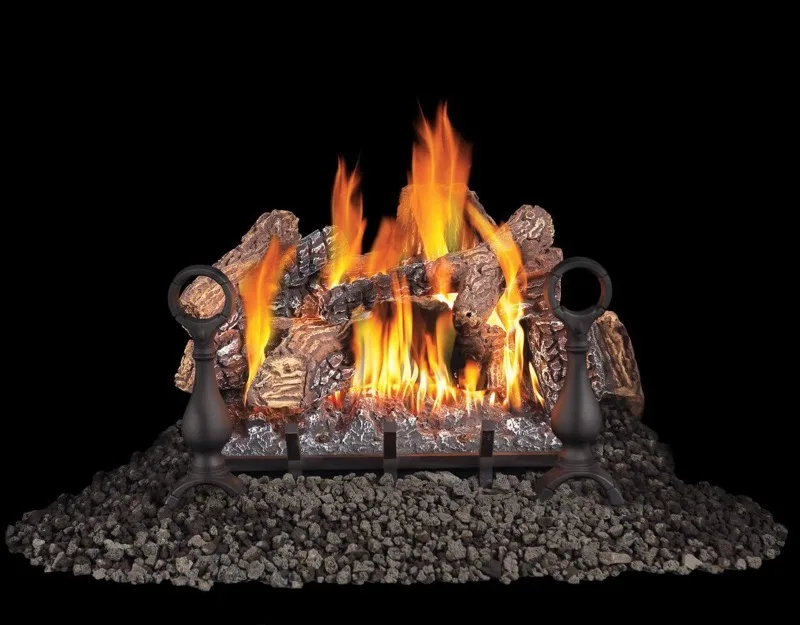 Napoleon
Fiberglow Gas Log Set - 24"
The size that fits the most common masonry opening
$$$$
Gas Logs
See this model →
Napoleon
Fiberglow Gas Log Set - 18"
For a small firebox, or a shallow one
$$$$
Gas Logs
See this model →
Napoleon
Fiberglow Gas Log Set - 24"
The size that fits the most common masonry opening
$$$$
Gas Logs
See this model →
Napoleon
Fiberglow Gas Log Set - 18"
For a small firebox, or a shallow one
$$$$
Gas Logs
See this model →
Everything else in this category is in the configurator further up the page.