
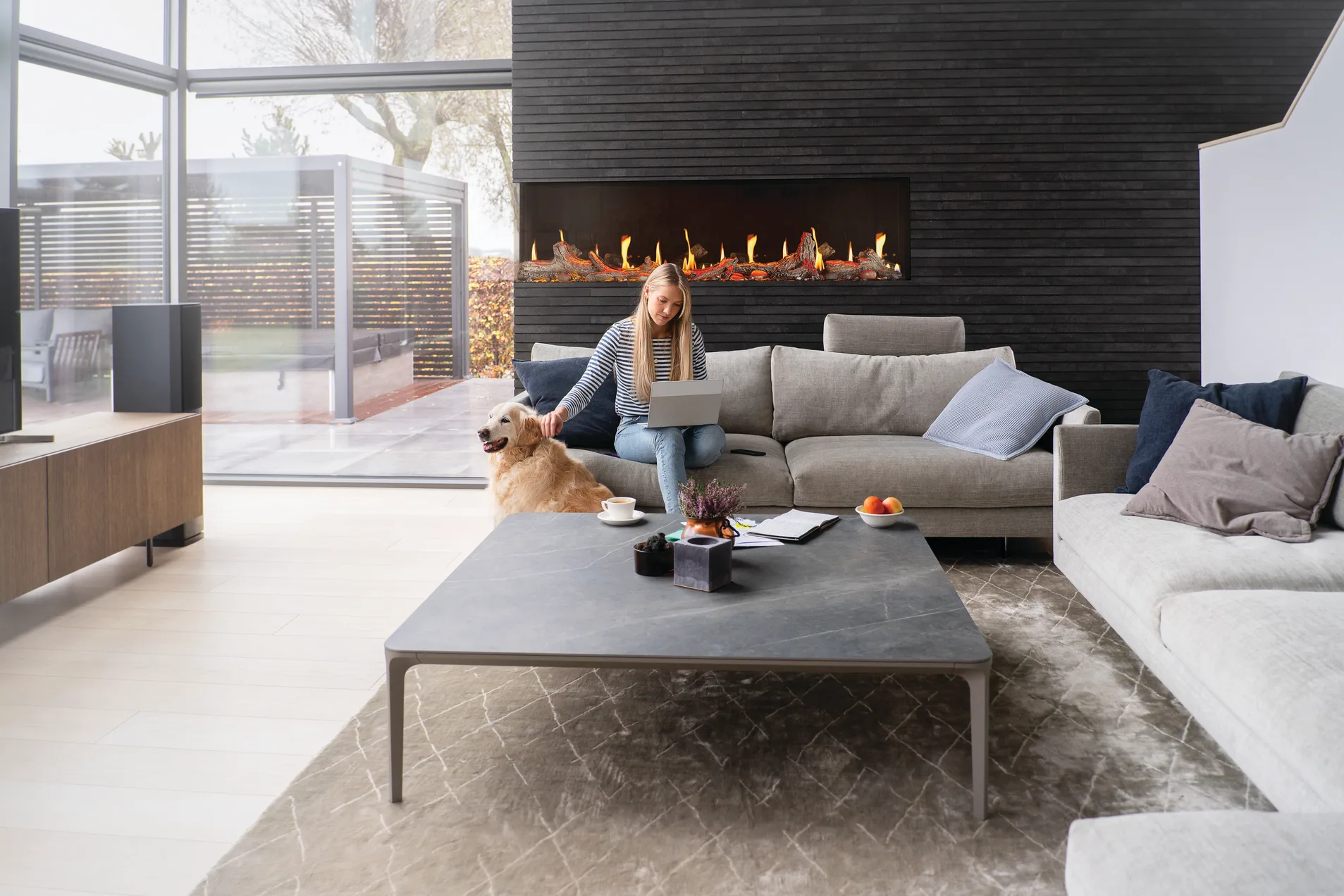
Indoor · electric
Electric Fireplaces in Utah
Flame anywhere a vent can't go—basements, condos, bedrooms, offices. No gas line, no venting, and it runs on a red air day.
The product browser didn't load
It's a third-party tool and it isn't responding right now. Everything it shows is also on this page—keep scrolling for the full list, or go straight to your local shop, who can walk the whole range with you.
Concept
The short answer
An electric fireplace makes flame with light and heat with a resistance element, so it needs no gas line, no flue, and no combustion permit. That is why it goes into basements, condos, bedrooms and offices where nothing else can, and why it runs on any air-quality day. A plug-in unit on a standard household circuit tops out around 1,500 watts—roughly 5,000 BTU—so it warms the room it is in rather than the house.
In plain language
Why Electric Stopped Looking Fake
The technology moved a long way in a short time, and the range now splits into four quite different products. Knowing which one you are looking at is most of the decision.
- LCD flame, not lights and mirrors
- The top of this range projects the fire from an LCD panel behind the glass rather than bouncing light off a rotating foil. That single change is why a current unit looks nothing like whatever you last saw in a rental, and it is the main thing separating the tiers.
- Plug-in or hardwired
- Most units run on an ordinary 120-volt outlet, which caps the heater around 1,500 watts. Larger and multi-sided models are hardwired, sometimes on a dedicated circuit, which buys more output. If the room has no spare circuit, say so early—it decides the list.
- Insert, built-in, wall-mount, or console
- An insert fills a masonry opening you already have. A built-in frames into a wall like a gas unit. A wall-mount hangs on the surface with no framing at all. A media console is furniture with a fire in it—no installation, and it moves house with you.
- Water-vapour units are a different animal
- The Dimplex water-vapour range makes a genuinely three-dimensional flame from mist rather than light, and it needs a water line. That makes it a remodel or new-construction product rather than a retrofit, and it turns up mostly in large custom homes and commercial rooms.
Start here
When Electric Is the Right Answer
This category wins on where it can go, not on how much heat it makes. Those are the rows.
- No gas line, and running one is not realistic Electric—this is the category
- A condo or a rental where you cannot cut a vent Wall-mount or a media console
- A masonry opening, no gas, and you want it sealed Electric insert
- You want the room genuinely warm on the coldest night Gas
- You want heat with the power out Wood
The difference
Electric or Gas
The comparison that actually decides this category, and the answer is not the same in a basement as it is in a great room.
| Electric | Gas | |
|---|---|---|
| Venting | None | Sealed pipe to outside |
| Gas line | No | Yes |
| Where it can go | Almost anywhere with an outlet | Anywhere a vent can reach |
| Heat | Around 5,000 BTU on a standard circuit | Enough to warm a large room |
| Runs in a power cut | No | Yes with a standing pilot; often on battery backup |
| Red air day | Runs | Runs |
| Altitude conversion | Not applicable | Usually needed above about 4,500 ft |
Local
What Changes Because This Is Utah
Altitude Does Nothing to it, and that is a Real Advantage
There is no orifice, no combustion, and nothing to convert. A gas appliance above roughly 4,500 feet needs a high-altitude kit; an electric unit performs identically in St. George at 2,500 feet and in Park City at 7,000. In a state that spans that range, it is one less thing to get wrong.
It Runs on Every Air-Quality Day of the Year
No combustion means nothing to restrict. On a red day along the Wasatch Front, when solid-fuel burning is not permitted, an electric fireplace is unaffected—as is sealed gas. If the fire needs to work on the stillest, coldest days in a valley, that narrows the field to two fuels.
It is the Fastest-Growing Part of This Business
Call it 10% of what these shops do now, up sharply, and the reason is placement rather than fashion—basements, bonus rooms, primary bedrooms, and offices are rooms that were never going to get a flue.
What it costs
Installed, in Utah
Electric is the least complicated install in the catalogue and usually the cheapest: no venting, no gas line, and no combustion permit, so the unit itself is most of what you pay. A wall-mount or a media console often needs no trade at all. Where cost does appear is on the electrical side—a built-in or a multi-sided unit may want a dedicated circuit, and a water-vapour model needs a water line, which turns it into a remodel job rather than an afternoon.
Installed price bands for electric are not in yet. Rather than reuse the gas figures, which would be wrong in both directions, this page says what drives the number and leaves the range to the shop quoting it.
Questions buyers ask
About Electric Fireplaces
Do electric fireplaces actually heat a room?
Yes, a room—not a house. A plug-in unit on a standard household circuit tops out around 1,500 watts, which is roughly 5,000 BTU and enough to take the edge off a bedroom, an office, or a basement family room. Hardwired and larger units go further. If you need to heat an open great room on the coldest night of the year, that is a gas conversation.
Do electric fireplaces need venting?
No. There is no combustion, so there is nothing to vent—no flue, no chimney, no sealed pipe, and no combustion permit. That absence is the entire reason the category exists, and it is why an electric unit can go in a room where nothing else is possible.
How much does it cost to run an electric fireplace?
Work it out from the wattage rather than from a marketing claim. A 1,500-watt heater running flat out uses 1.5 kilowatt-hours an hour, so at Utah residential rates that is a low single-digit figure per hour, and most people run the flame effect on its own for a fraction of that—the flame draws very little without the heater on.
The honest framing is that electric costs more per unit of heat than natural gas in Utah, and it makes up for it by going where gas cannot.
Can an electric fireplace go in a basement or a condo?
This is exactly where the category earns its place. No flue means no penetration through a ceiling or a shared wall, which is what usually rules a fireplace out of a basement, a condo, or an apartment. An outlet is normally the only requirement.
What is the difference between an electric insert and a wall-mounted electric fireplace?
An insert fills an existing masonry opening and makes an unused fireplace usable without a gas line. A wall-mount hangs on the surface of a finished wall with no framing and no opening at all—it is the answer for a blank wall where nothing was ever built in.
Do electric fireplaces look realistic now?
The top of the range does, and the reason is a change in how the flame is made. Current premium units project the fire from an LCD panel rather than reflecting light off a rotating foil, which is why they read as depth rather than as a flicker. Go and look at one running—this is the one category where a showroom visit changes people's minds most often.
Does an electric fireplace need its own circuit?
Often not. Most plug-in units are designed for a normal 120-volt outlet, though it is worth not sharing that circuit with other heavy draws. Larger built-in and multi-sided models are hardwired and may want a dedicated circuit, which is an electrician's visit rather than a complication.
Will an electric fireplace work in a power outage?
No. No electricity, no flame and no heat. If riding out an outage matters—a canyon home, a cabin, or anywhere the power is unreliable—the answer is wood, or gas with a standing pilot. It is the one thing electric genuinely cannot do.
What is a water-vapour electric fireplace?
A unit that makes its flame from ultrasonically produced mist lit from below, which gives a flame with real three-dimensional volume rather than a projected image. It needs a plumbed water supply, so it belongs in a remodel or a new build rather than a retrofit, and it turns up mostly in large custom homes and commercial spaces.
Can I put a TV above an electric fireplace?
Usually yes, and this is the category where it is least fraught—the heat comes out of a front vent rather than rising through a firebox, and with the heater off there is essentially none. Check the specific model's clearance to the wall above, because the answer varies with where the unit throws its air.
Which electric fireplaces do Utah dealers recommend?
The network reads Napoleon as the best-value tier—the Entice for a modern room and the Element range as the traditional entry. Dimplex sits mid-to-high, with the Ignite Evolve and Ignite Bold lines and the Revillusion range for a traditional look. At the top are the Napoleon Elevation X Electric in 36 and 42 inch LCD formats and, above those, the Luminex 65.
Do I need a permit for an electric fireplace?
Normally not for a plug-in unit, because there is no combustion and no venting. Anything hardwired brings the electrical work into scope, and a water-vapour unit brings plumbing in as well. The shop installing it will tell you which of those applies to your room.
How it works
Here's How to Find the Perfect Fireplace
- 01
Browse the Products
Answer a few questions about your room and see the units that actually fit it.
Browse fireplaces → - 02
Find Your Local Dealer
Enter your zip code and meet the shop that serves your neighborhood. One shop, not a bidding pile.
Find your dealer → - 03
Book an Appointment
Showroom visit or in-home. They handle the permit, the venting, and the install.
Book an appointment →
Find the Shop That Carries This
Enter your zip code and meet the showroom nearest you.
Worth a look
Three Models to Check Out
Chosen from what these shops actually stock and install. Every one opens its own page.
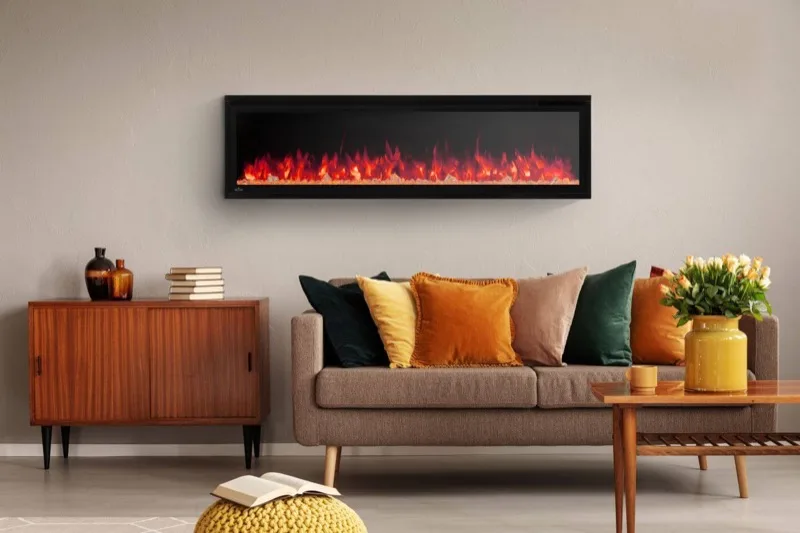 Napoleon
Entice 60
The value end, and honest about what it is
$$
Zero Clearance
See this model →
Napoleon
Entice 60
The value end, and honest about what it is
$$
Zero Clearance
See this model →
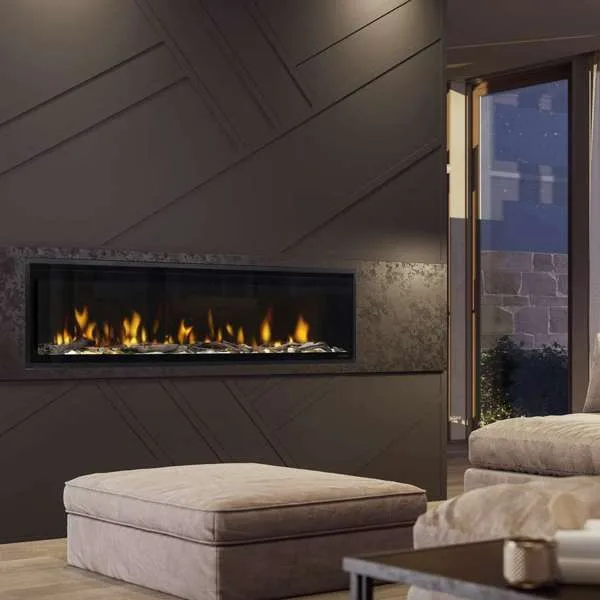 Dimplex
Ignite Evolve 60" Linear Electric Fireplace
A clear step up in the flame, which is the whole of what you pay for
$$$$
Zero Clearance
See this model →
Dimplex
Ignite Evolve 60" Linear Electric Fireplace
A clear step up in the flame, which is the whole of what you pay for
$$$$
Zero Clearance
See this model →
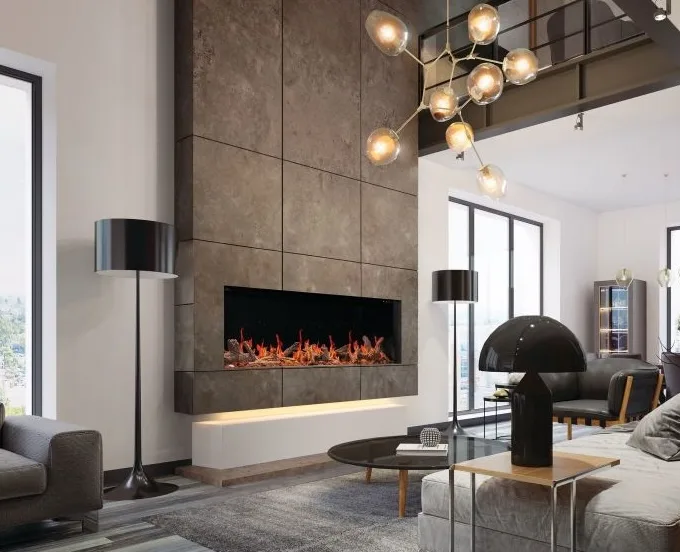 Napoleon
Luminex
The top of the range—specified into homes that could have run gas
$$$$
Zero Clearance
See this model →
Napoleon
Luminex
The top of the range—specified into homes that could have run gas
$$$$
Zero Clearance
See this model →
Three of 89. Everything else in this category is in the configurator further up the page.